The digital marketplace for middle-market business acquisitions and commercial real estate has undergone significant consolidation over the past two decades. At the center of this market structure is LoopNet, originally founded in 1995 by Dennis DeAndre. Following its public listing in 2006 and subsequent acquisition by CoStar Group in April 2012 for approximately 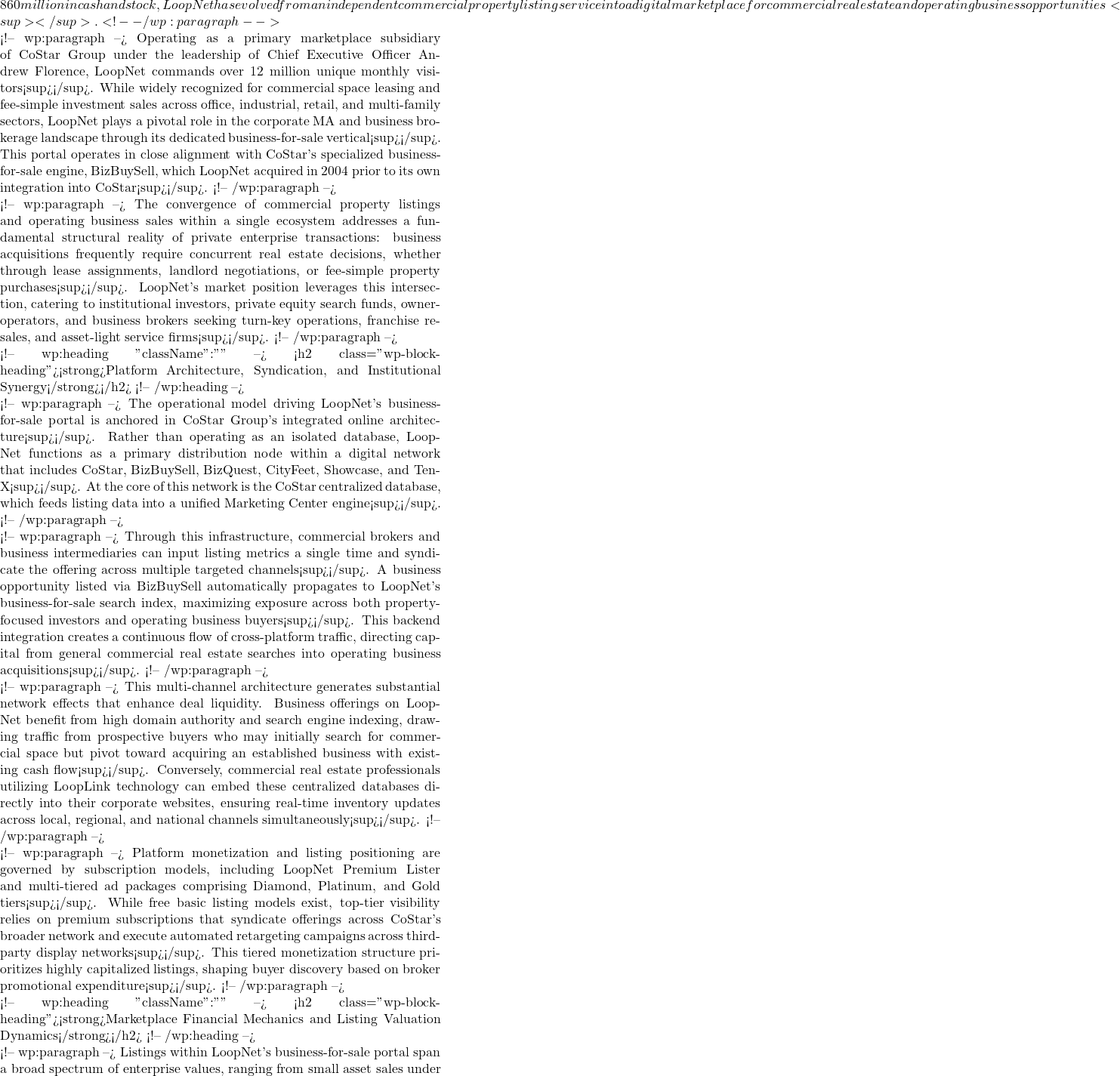
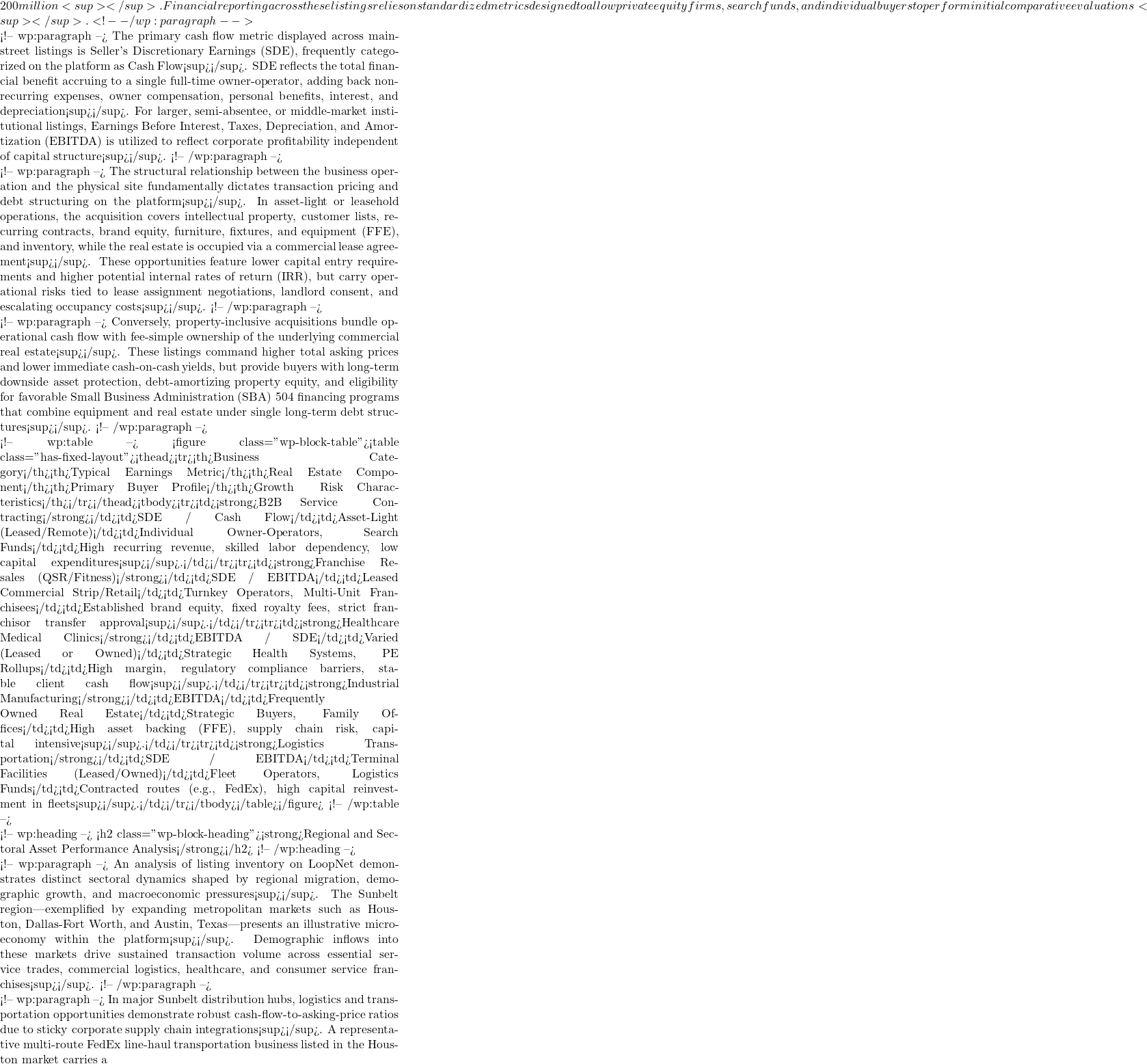



Healthcare assets similarly demonstrate strong valuation metrics driven by private equity consolidation strategies. Strategic medical acquisitions—such as a pain management clinic network generating 





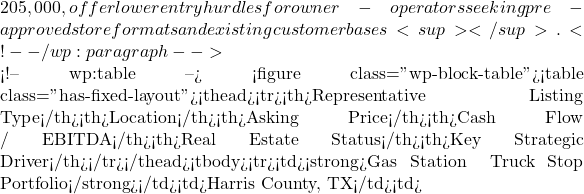
Retail and consumer concepts maintain active transaction volume, though valuation dynamics differ between independent concepts and branded franchises. Multi-unit retail networks, such as a 12-location specialty smoke shop chain in Houston generating 










Due Diligence Architecture and NDA Workflow Mechanics
Acquiring an operating enterprise involves greater disclosure complexity than purchasing vacant commercial space. To protect proprietary operations, confidential financial records, employee structures, and supplier relationships, LoopNet utilizes a structured due diligence disclosure workflow integrated into CoStar’s backend infrastructure.
The due diligence pipeline begins when a prospective buyer discovers a listing on LoopNet or BizBuySell and initiates contact. Listing security is configured by the representing broker through CoStar’s Marketing Center and Data Room module, which establishes one of four standardized disclosure settings:
The Public setting allows open access to high-level marketing material, general descriptions, top-level financial summaries, and broker contact info without requiring user verification. The Registration setting mandates that prospective buyers create a verified account and provide contact details before unlocking extended offering memorandums.
The Confidentiality Agreement setting requires buyers to digitally execute a legally binding Non-Disclosure Agreement (NDA) directly through the platform interface before accessing granular financial files, customer concentration reports, and tax returns. The Approval Required setting adds a manual gatekeeper layer, requiring the broker or seller to manually vet the buyer’s profile and verify financial capacity, such as reviewing Proof of Funds (POF) or bank comfort letters, before granting access to the secure Data Room.
Once access is authorized, the platform’s Data Room tracks prospective buyer engagement, logging document views, file downloads, and time spent reviewing operational materials. Brokers can export these analytics into Secure Leads reports to provide sellers with real-time audit trails of buyer interest. This systematic workflow minimizes the risk of sensitive operational intelligence leaking to local competitors, employees, or suppliers during preliminary negotiations.
Competitive Landscape and Market Alternatives
Although LoopNet and its parent company CoStar maintain a prominent position in commercial real estate and business listings, the platform operates within a competitive landscape comprised of general commercial marketplaces, specialized business M&A portals, and niche vertical channels.
CREXi (Commercial Real Estate Exchange, Inc.) stands as LoopNet’s primary competitor in the commercial property sector. Featuring over 130,000 active commercial property listings, CREXi has captured market share among commercial brokers by offering transaction management tools and competitive subscription pricing. However, CREXi focuses primarily on commercial real estate property sales and leases rather than small-business corporate M&A.
In the business-for-sale market, platform specialization dictates buyer discovery and listing placement. As a direct sister platform under CoStar Group, BizBuySell serves as the primary liquidity pool for main-street business M&A, maintaining between 45,000 and 65,000 active listings. LoopNet functions as the institutional gateway to this inventory, capturing property searchers and real estate investors looking to transition into cash-flowing operations.
Alternative platforms address distinct market segments underserved by CoStar’s premium pricing model. Brevitas focuses on institutional private equity and private wealth advisors, emphasizing private off-market distributions and structured debt capital matching. QuantumListing operates an open-access platform with low annual subscription costs (

Vertical-specific engines further fragment the market by offering deep operational customization. For example, PepperLot specializes in second-generation restaurant space and turnkey food and beverage operations, offering specialized listing fields such as grease trap capacity, kitchen hood specifications, and liquor license transfer status that general real estate marketplaces omit. Specialized sites within CoStar’s broader network, such as Land.com for rural land and OfficeSpace.com for corporate workspace, provide domain-specific filters for focused search requirements.
Broker sentiment regarding LoopNet frequently centers on subscription costs and listing visibility rules. Rising fees for premium exposure have prompted some regional firms to syndicate listings across lower-cost alternatives. Nevertheless, CoStar’s unified network remains an essential distribution channel due to its cross-platform syndication, high web traffic, and centralized analytical database.
Conclusions and Strategic Outlook
LoopNet’s business-for-sale vertical represents a vital operational bridge between commercial real estate distribution and main-street business M&A. By leveraging CoStar Group’s broader multi-platform network, LoopNet enables market participants to address physical real estate needs and operational asset transfers within a single digital ecosystem.
Synthesizing platform mechanics, regional performance data, and competitive positioning yields three key strategic conclusions:
First, cross-platform syndication between LoopNet, BizBuySell, and CoStar maximizes listing exposure, drawing capital from traditional real estate buyers into operating business acquisitions. This structural integration ensures high liquidity for turn-key businesses and asset-light service enterprises.
Second, macroeconomic trends and demographic shifts continue to drive buyer demand toward businesses with verifiable cash flow, contracted revenues, or fee-simple property backings. Asset categories such as logistics routes, healthcare practices, and essential trade services maintain resilient valuations due to their recession-resistant operational characteristics.
Third, the integration of digital due diligence protocols, secure Data Rooms, and automated NDA workflows has standardized confidential transaction management. This infrastructure reduces transaction friction while safeguarding sensitive company information during initial buyer vetting.
Looking ahead, LoopNet’s position within the commercial marketplace will depend on its ability to adapt to evolving broker demands, competitive pricing pressure from open-access platforms, and the growing need for integrated deal financing tools. As institutional private equity and private search funds continue to deploy capital into lower-middle-market business rollups, centralized digital marketplaces will remain essential infrastructure for corporate acquisitions and real estate site selection.

