This article is about the equilibrium price determination, situations of market surplus and market shortage as well as shifts in demand or supply cause the market price to change.
It explains how price is arrived at in a market system as well as the market forces at work in a market system describing how changes in demand or supply will lead to a new price. Such changes are illustrated through neat and accurate diagrams of price and quantity.
Finally, this post also explains the concepts of consumer and producer surplus.
Price relationship between demand and supply
Meeting consumer wants profitably is the central aim of marketing. This means that marketing managers need to know how free markets work to determine prices of products sold by their businesses. If the business can produce the product at the market price, it should be profitable.
In free markets, the equilibrium price is determined when demand equals supply.
Demand and supply analysis helps us understand this relationship:
- Demand is the amount customers are willing to buy at a given price. Demand is the quantity of a product that consumers are willing and able to buy at a given price in a time period.
- Supply is the amount businesses are will to sell at a given price. Supply is the quantity of a product that firms are prepared to supply at a given price in a time period.
Law of Demand explains that demand has an inverse relationship with price. It means that:
- A fall in the price would result in a rise in the demand.
- A rise in the price would result in a fall in the demand.
Determining the Equilibrium Price
When demand and supply are combined, the equilibrium price will be determined. This Equilibrium Price is the market price being at the point where demand for a product equals supply of a product.
Equilibrium Price is also referred to as ‘the market price’. It occurs when demand and supply are equal, the term ‘equilibrium’ means a state of rest or balance. In economic terms it is when price stays the same unless there is a change in either demand or supply.
On the following chart, the market is in equilibrium. The price is USD![3.5 meaning quantity demanded by consumers is 70 units. This is equal to the quantity firms are willing and able to supply. <!-- /wp:paragraph --> <!-- wp:image {"align":"center","id":20464,"sizeSlug":"full","linkDestination":"none"} --> <figure class="wp-block-image aligncenter size-full"><img src="https://www.superbusinessmanager.com/wp-content/uploads/2023/01/Equilibrium-Price.jpg" alt="Equilibrium Price" class="wp-image-20464"/><figcaption class="wp-element-caption">The Equilibrium Price.</figcaption></figure> <!-- /wp:image --> <!-- wp:paragraph --> So, market price is the price where quantity demanded equals quantity supplied. <!-- /wp:paragraph --> <!-- wp:paragraph --> Though markets aim to reach equilibrium, they can record excesses. This can happen both with demand and supply - excessive demand and excessive supply. When this occurs it is called a disequilibrium. <!-- /wp:paragraph --> <!-- wp:separator --> <hr class="wp-block-separator has-alpha-channel-opacity"/> <!-- /wp:separator --> <!-- wp:html --> <script async="" src="https://pagead2.googlesyndication.com/pagead/js/adsbygoogle.js?client=ca-pub-3196649779609103" crossorigin="anonymous"></script> <!-- Inside Content --> <ins class="adsbygoogle" style="display:block" data-ad-client="ca-pub-3196649779609103" data-ad-slot="4855547878" data-ad-format="auto" data-full-width-responsive="true"></ins> <script> (adsbygoogle = window.adsbygoogle || []).push({}); </script> <!-- /wp:html --> <!-- wp:separator --> <hr class="wp-block-separator has-alpha-channel-opacity"/> <!-- /wp:separator --> <!-- wp:heading --> <h2><strong>Market Surplus</strong></h2> <!-- /wp:heading --> <!-- wp:paragraph --> Market surplus means excess supply. <!-- /wp:paragraph --> <!-- wp:paragraph --> If the prices were higher than this, there would be unsold stocks - excess supply. Suppliers do not want this, so they will lower the price. Where there is excess supply in a market, this will tend to drive the price downwards. <strong></strong> <!-- /wp:paragraph --> <!-- wp:paragraph --> At USD](https://www.SuperBusinessManager.com/wp-content/ql-cache/quicklatex.com-f4fe464c6fdc287fe2e8d85d22215d78_l3.png "Rendered by QuickLaTeX.com") 5 consumers would only demand a quantity of 40 products. Producers would be willing to supply 100 products. A surplus exists between 40 products and 100 products – the market has produced 60 units that consumers are not willing and able to buy. This would put pressure on firm to lower prices.
5 consumers would only demand a quantity of 40 products. Producers would be willing to supply 100 products. A surplus exists between 40 products and 100 products – the market has produced 60 units that consumers are not willing and able to buy. This would put pressure on firm to lower prices.
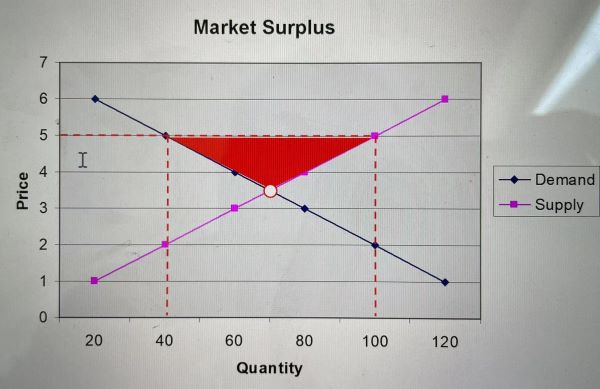
In short, lower prices increase demand and decrease production leading to equilibrium. If price is above equilibrium, a surplus would result from supply exceeding demand. A surplus would encourage companies to reduce prices, which in turn, would increase demand until equilibrium is found.
Market Shortage
Market shortage means excess demand.
If the price is lower than the equilibrium, then, stocks will run out – leaving excess demand. Suppliers could make a higher profit by raising the price – to the equilibrium level. Where there is excess demand in a market, this will tend to drive the price upwards.
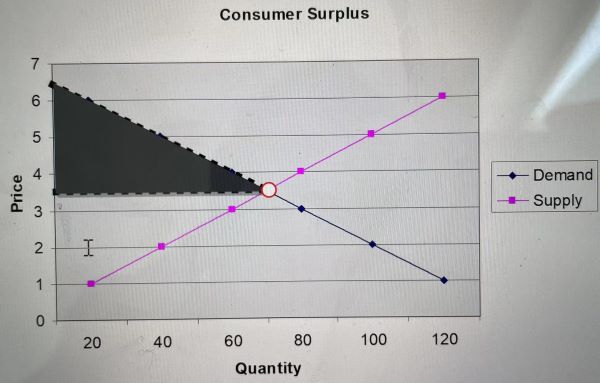
At USD![2 consumers would demand a quantity of 100 products. However, producers would be willing and able to supply 40 products. A shortage exists between 40 products and 100 products. 60 more units are required at this price. Since the good is scarce and some consumers are willing and able to pay more, firms are able to increase the price. <!-- /wp:paragraph --> <!-- wp:image {"align":"center","id":20465,"sizeSlug":"full","linkDestination":"none"} --> <figure class="wp-block-image aligncenter size-full"><img src="https://www.superbusinessmanager.com/wp-content/uploads/2023/01/Market-Shortage.jpg" alt="Market Shortage" class="wp-image-20465"/><figcaption class="wp-element-caption">Market shortage.</figcaption></figure> <!-- /wp:image --> <!-- wp:paragraph --> In short, higher prices reduce demand and increase production leading to equilibrium. If price is below equilibrium, a shortage would result from demand exceeding supply. A shortage would encourage companies to increase prices, which in turn, would reduce demand and increase supply until equilibrium is found. <!-- /wp:paragraph --> <!-- wp:separator --> <hr class="wp-block-separator has-alpha-channel-opacity"/> <!-- /wp:separator --> <!-- wp:html --> <script async="" src="https://pagead2.googlesyndication.com/pagead/js/adsbygoogle.js?client=ca-pub-3196649779609103" crossorigin="anonymous"></script> <!-- Inside Content --> <ins class="adsbygoogle" style="display:block" data-ad-client="ca-pub-3196649779609103" data-ad-slot="4855547878" data-ad-format="auto" data-full-width-responsive="true"></ins> <script> (adsbygoogle = window.adsbygoogle || []).push({}); </script> <!-- /wp:html --> <!-- wp:separator --> <hr class="wp-block-separator has-alpha-channel-opacity"/> <!-- /wp:separator --> <!-- wp:heading --> <h2><strong>Shifts in demand or supply cause the market price to change</strong></h2> <!-- /wp:heading --> <!-- wp:paragraph --> A shift of the demand curve and supply curve will cause the market price to change as illustrated in the two diagrams below. <!-- /wp:paragraph --> <!-- wp:paragraph --> 1. <strong>DEMAND. Effect of a demand shift on market price</strong> <!-- /wp:paragraph --> <!-- wp:paragraph --> This varies with price. For all normal goods the quantity bought rises with a price fall and the quantity bought falls with a price increase. Demand increases when price decreases. And demand decreases when price increases. <!-- /wp:paragraph --> <!-- wp:paragraph --> Apart from price changes, the level of demand for a product can vary due to a change in any determinants of demand. <!-- /wp:paragraph --> <!-- wp:paragraph --> What impacts demand except the price? <!-- /wp:paragraph --> <!-- wp:verse --> <pre class="wp-block-verse">Changes in consumers' incomes, price of other substitute goods and complementary goods, advertising and promotion spending, availability of cheap credit, expectations of future price changes - a rise or decrease is coming, changes in population such as population size and population structure, market failures, fashion and other factors such as trends and tastes, quality, weather, speculation, government legislation, the availability of credit.</pre> <!-- /wp:verse --> <!-- wp:paragraph --> All of these changes above lead to a new demand curve. So, for example, the demand for holidays will increase after an increase in consumer incomes. <!-- /wp:paragraph --> <!-- wp:paragraph --> An outward shift is the result of an increase in the quantity demanded at each price level. This causes a movement along the supply curve. Firms will be willing and able to supply more as they are able to charge a higher price and vice versa. <!-- /wp:paragraph --> <!-- wp:image {"align":"center","id":20468,"sizeSlug":"full","linkDestination":"none"} --> <figure class="wp-block-image aligncenter size-full"><img src="https://www.superbusinessmanager.com/wp-content/uploads/2023/01/Effect-of-a-demand-shift-on-market-price.jpg" alt="Effect of a demand shift on market price" class="wp-image-20468"/><figcaption class="wp-element-caption">Effect of a demand shift on market price.</figcaption></figure> <!-- /wp:image --> <!-- wp:paragraph --> 2. <strong>SUPPLY. Effect of a supply shift on market price</strong> <!-- /wp:paragraph --> <!-- wp:paragraph --> This varies with price. Firms will be more willing to supply a product if the price rises and will supply less as the price falls. Supply increases when price increases. And supply decreases when price decreases. <!-- /wp:paragraph --> <!-- wp:paragraph --> Apart from changes in price, the level of supply of a product can vary due to a change in any of these determinants of supply. <!-- /wp:paragraph --> <!-- wp:paragraph --> What impacts supply except price? <!-- /wp:paragraph --> <!-- wp:verse --> <pre class="wp-block-verse">Cost of making the product, technology, improved efficiency (advances in technology to make cost of production lower), better workforce, price of factors of production such as raw materials, land, labor, etc., profit levels of other products, by-products, government policy such as subsidies paid by government to suppliers, TAXes, etc., expectations, barriers to entry, time, climate and other natural factors such as weather conditions, natural disasters, etc, labor strikes, increase in competitors.</pre> <!-- /wp:verse --> <!-- wp:paragraph --> All of these changes above lead to a new supply curve. So, for example, the supply of rice will be reduced after very poor weather in the major growing areas. <!-- /wp:paragraph --> <!-- wp:paragraph --> A shift of the supply curve will also cause the market price to change, as illustrated in the diagram below. An outward shift is the result of an increase in the quantity supplied at each price level. This causes a movement along the demand curve. Consumers will be willing and able to buy more as the price falls and vice versa. <!-- /wp:paragraph --> <!-- wp:image {"align":"center","id":20467,"sizeSlug":"full","linkDestination":"none"} --> <figure class="wp-block-image aligncenter size-full"><img src="https://www.superbusinessmanager.com/wp-content/uploads/2023/01/Effect-of-a-supply-shift-on-market-price.jpg" alt="Effect of a supply shift on market price" class="wp-image-20467"/><figcaption class="wp-element-caption">Effect of a supply shift on market price.</figcaption></figure> <!-- /wp:image --> <!-- wp:separator --> <hr class="wp-block-separator has-alpha-channel-opacity"/> <!-- /wp:separator --> <!-- wp:html --> <script async="" src="https://pagead2.googlesyndication.com/pagead/js/adsbygoogle.js?client=ca-pub-3196649779609103" crossorigin="anonymous"></script> <!-- Inside Content --> <ins class="adsbygoogle" style="display:block" data-ad-client="ca-pub-3196649779609103" data-ad-slot="4855547878" data-ad-format="auto" data-full-width-responsive="true"></ins> <script> (adsbygoogle = window.adsbygoogle || []).push({}); </script> <!-- /wp:html --> <!-- wp:separator --> <hr class="wp-block-separator has-alpha-channel-opacity"/> <!-- /wp:separator --> <!-- wp:heading --> <h2><strong>Consumer Surplus</strong></h2> <!-- /wp:heading --> <!-- wp:paragraph --> Consumer surplus is the difference between what a person would be willing to pay and what they actually have to pay to buy a certain amount of a good. <!-- /wp:paragraph --> <!-- wp:paragraph --> Consumer surplus is between the dotted lines. It is the dark grey area below the demand curve and above the price equilibrium level. <!-- /wp:paragraph --> <!-- wp:paragraph --> The price is USD](https://www.SuperBusinessManager.com/wp-content/ql-cache/quicklatex.com-fdcf43479ddacca513176e05d43c2040_l3.png "Rendered by QuickLaTeX.com") 3.5. Those who are prepared to pay USD
3.5. Those who are prepared to pay USD 2.5. Those who are prepared to pay USD
 1.5. An even more simple definition is when a consumer is willing to pay more than the actual price they pay.
Producer Surplus
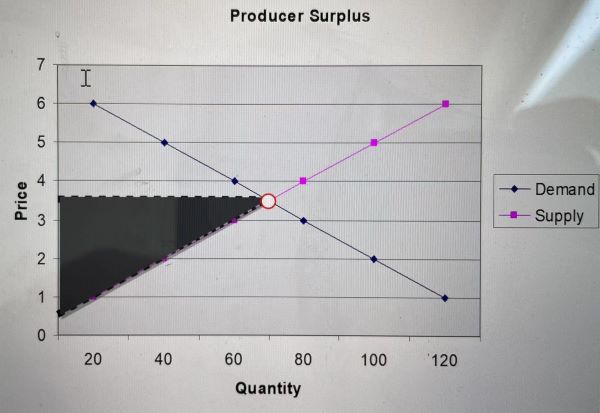
The difference between what a producer is paid for a certain amount of a good and the lowest price they require in order to supply that amount.
Producer surplus is between the dotted lines. It is the dark grey area above the supply curve and below the equilibrium price level.
Some suppliers are willing to supply the market, if the price is at least USD 3.5, so they have a surplus of USD$1.5. An even more simple definition is when a supplier is willing to deliver products for less than the actual price they receive.
Summary of price determination in the market system
In short, a market is a place where buyers and sellers meet to trade. In the market economy, it is the market that determines the price of the goods and services that we buy.
The market price, or Equilibrium Price, is determined by the levels of demand and supply in the market. A market in equilibrium is with an equilibrium market price of P and an equilibrium quantity being bought and sold of Q.
Market forces of demand and supply determine the market price. Consumer surplus exists when the price is less than a consumer is willing and able to pay. Producer surplus exists when the price is above what a firm is willing and able to accept.

Comments are closed.