New York State has enacted an annual “pied-à-terre” surcharge targeting high-value residential properties in New York City that do not serve as an owner’s primary residence. Effective July 1, 2026, as part of the state’s fiscal budget framework, the tax imposes an ongoing levy on luxury secondary homes, townhouses, condominiums, and cooperative apartments across the five boroughs.
The primary objective of the surcharge is to generate municipal revenue—projected at roughly 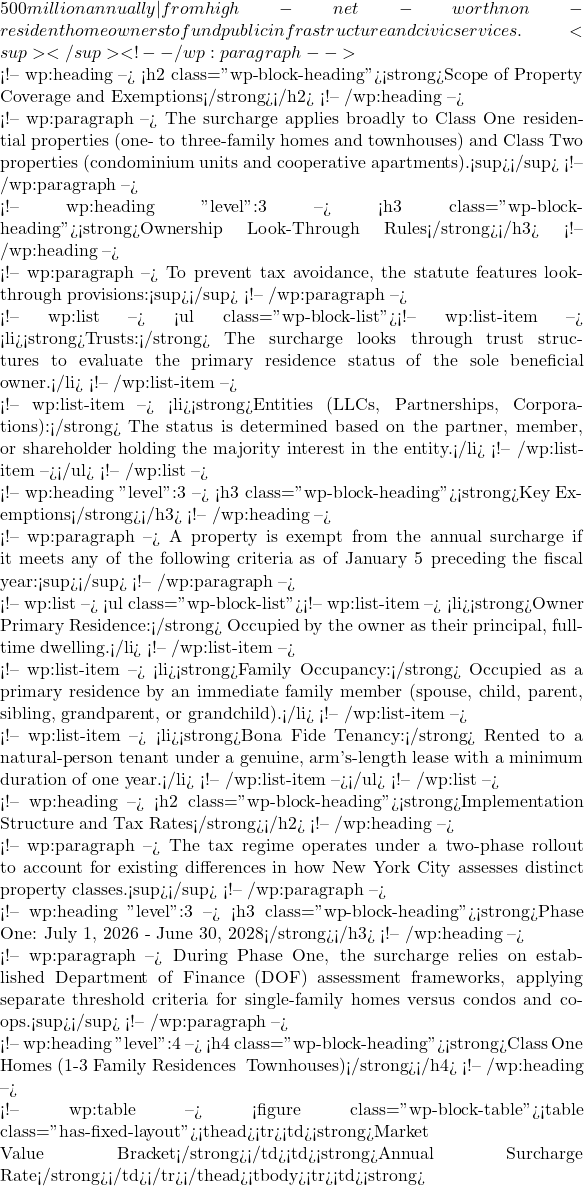 5,000,000 –
  15,000,001 –
  25,000,000
Class Two Units (Condominiums & Cooperatives)
Because Class Two DOF assessed values historically reflect lower baseline assessments than actual market transactions, Phase One uses adjusted taxable value thresholds paired with higher statutory percentages.
| DOF Assessed Valuation Bracket | Annual Surcharge Rate |
 3,000,000 3,000,000 | 4.00% |
 5,000,000 5,000,000 | 5.25% |
Over 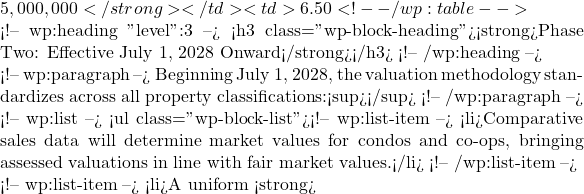 5 million market value threshold will apply to all property types. 5 million market value threshold will apply to all property types.Administrative Compliance and AppealsThe New York City Department of Finance manages non-primary residence designations through annual verification reviews:
Economic and Strategic ImplicationsThe introduction of the pied-à-terre surcharge introduces critical considerations for high-net-worth real estate strategies in New York City:
 I am the Founder and Editor-in-Chief of the SuperBusinessManager.com website. I am the EU citizen with approximately 20 years of experience in secondary and higher business education in both public and private sectors. Currently living with my wife and our two adorable children in China where I teach Business Management and Economics at K-12 international schools. Professionally, I am an experienced Lecturer and Researcher in Business Management and Economics, as well as IB Examiner for DP Business Management at International Baccalaureate (IB). Privately, I enjoy reading and collecting books on business management, personal finance and investing. You can contact me at jerrygrzegorzek@hotmail.com |