No single model perfectly describes the stock market, but they serve different purposes.
The Efficient Market Hypothesis (EMH) explains how prices reflect information, Discounted Cash Flow (DCF) analysis determines intrinsic fundamental value, and Behavioral Finance accounts for market psychology.
1. Efficient Market Hypothesis (EMH)
The Core Idea: All available information is instantly and accurately reflected in a stock’s current price, making it impossible to consistently “beat the market.”
Variants:
- Weak form: Past prices and data cannot predict future prices (rules out technical analysis).
- Semi-strong form: Public information (news, earnings reports) is already priced in (rules out fundamental analysis).
- Strong form: Even private or insider information is fully reflected in the price.
Best Used For: Understanding market efficiency, benchmarking active fund performance, and building low-cost index portfolios.
2. Discounted Cash Flow (DCF)
The Core Idea: A company’s intrinsic value is the sum of all its expected future free cash flows, discounted back to their present value at a specific rate (e.g., 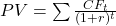

Best Used For: Fundamental equity research, valuing stable and cash-generative companies, and determining whether a specific stock is currently trading at a discount or premium to its actual worth.
3. Behavioral Finance
The Core Idea: Markets are driven by human psychology, emotion, and cognitive biases rather than pure rationality, leading to market anomalies, bubbles, and crashes.
Best Used For: Explaining market volatility, herd mentality, and why asset prices frequently deviate from their intrinsic fundamental values.
4. Supply and Demand
The Core Idea: At its most foundational level, a stock’s price is simply determined by the balance of buyers and sellers at any given moment.
Best Used For: Explaining short-term price movements and liquidity impacts, especially for highly volatile or speculative assets.
In practice, professional investors often combine these models.
They use DCF to estimate what a company should be worth, apply Behavioral Finance to understand market sentiment and timing, and rely on the principles of EMH to recognize the risks and difficulties of outperforming the broader market.

