This comprehensive business guide examines the foundational model of rational consumer choice, demonstrating how economic agents make optimal purchasing decisions under budget constraints and how leading global multinational corporations leverage these principles to structure product offerings, dynamic pricing strategies, and value proposition frameworks.
Introduction
In microeconomic analysis and enterprise management, the framework of rational consumer choice serves as the primary theoretical baseline for predicting how buyers allocate finite financial resources across competing goods and services. At its core, the theory posits that economic actors act purposefully, evaluating available alternatives through a systematic process of cost-benefit valuation to maximize total satisfaction, mathematically defined as utility. While pure economic rationality represents an idealized model, understanding its mechanics provides corporate strategists, financial analysts, and policymakers with indispensable tools for demand forecasting, product portfolio design, and revenue optimization.
Understanding rational consumer choice requires analyzing both microeconomic axioms and practical commercial realities. In modern global markets, consumers face complex purchasing decisions influenced by disposable income, relative price ratios, switching costs, and informational clarity. Enterprises that align their business models with the underlying logic of consumer utility optimization can capture greater market share, improve price realization, and build sustained competitive advantages. Conversely, firms that miscalculate how target demographics prioritize utility risk mispricing products, overestimating market capacity, or ceding ground to agile competitors.
This article explores the formal economic models underlying rational consumer choice, examines key mathematical formulations, evaluates real-world corporate applications across diverse industries, addresses behavioral deviations from classical rationality, and offers strategic frameworks for executive leadership.
Theoretical Foundations of Rational Consumer Choice
The classical framework of rational consumer choice rests on explicit theoretical assumptions regarding human decision-making. These axioms establish the logical architecture necessary to model consumer behavior quantitatively and derive demand curves for market analysis.
Axioms of Consumer Preference
To construct a coherent model of rational consumer choice, economists assume that individual preference orderings satisfy three essential conditions:
- Completeness: For any given pair of consumption bundles,
 and
and  , a consumer can explicitly state a preference. The individual prefers to (
 ), prefers to (
 ), or is strictly indifferent between the two bundles (
 ). This assumption guarantees that consumers are never incapable of making a decision.
 - Transitivity: Preference orderings are logically consistent across multiple options. If a consumer prefers bundle to bundle (), and bundle to bundle
 (
( ), then the consumer must prefer bundle to bundle (
 ). Transitivity prevents cyclical decision loops that would preclude utility maximization.
 - Non-Satiation (Monotonicity): Consumers generally prefer a larger quantity of a good to a smaller quantity, holding all other factors constant. Formally, if bundle contains at least as much of every good as bundle , and strictly more of at least one good, then is preferred to .
When these axioms hold, consumer preferences can be mathematically represented through a continuous utility function  , where
  represents the quantity of good
  consumed.
Utility Theory and Marginal Utility
Utility measures the satisfaction or value an individual derives from consuming a specific basket of goods. In modern economic theory, utility is treated as an ordinal concept rather than a cardinal one; it ranks bundles in order of preference rather than assigning absolute numerical units of pleasure.
A central concept in rational consumer choice is the Law of Diminishing Marginal Utility. Marginal Utility ( ) represents the additional utility gained from consuming one incremental unit of a specific good, defined mathematically as the partial derivative of the utility function with respect to that good:
![\[MU_x = \frac{\partial U}{\partial X}\]](https://www.SuperBusinessManager.com/wp-content/ql-cache/quicklatex.com-c2e5cfc289dfbce2e45d6de00840705b_l3.png "Rendered by QuickLaTeX.com")
As consumption of good  increases while holding other goods constant, the marginal utility derived from each additional unit of diminishes (
 ). This diminishing return explains why demand curves slope downward: consumers are willing to purchase additional units of a product only if its price decreases to reflect lower incremental utility.
Core Microeconomic Frameworks of Rational Choice
To translate abstract preferences into measurable market activity, economists combine consumer preferences with financial constraints. The interaction between indifference curves and budget lines yields the constrained optimization model that governs rational consumer choice.
Indifference Curves and the Marginal Rate of Substitution
An indifference curve illustrates all combinations of two goods that yield the exact same level of total utility to a consumer. Key characteristics of standard indifference curves include:
- They slope downward from left to right, reflecting the trade-off required to maintain constant total utility.
- They are convex to the origin due to diminishing marginal rates of substitution.
- Higher indifference curves correspond to higher total utility levels.
- Indifference curves never intersect, as intersection would violate the axiom of transitivity.
The slope of an indifference curve at any given point is defined as the Marginal Rate of Substitution ( ). It quantifies the rate at which a consumer is willing to give up units of good
  to obtain one additional unit of good while maintaining an identical level of utility:
![\[MRS_{x,y} = -\frac{dY}{dX} = \frac{MU_x}{MU_y}\]](https://www.SuperBusinessManager.com/wp-content/ql-cache/quicklatex.com-d1aa3ff0b61f12297f7d463dbbddf01b_l3.png "Rendered by QuickLaTeX.com")
The Budget Constraint and Income Allocation
A consumer’s purchasing capability is constrained by total disposable income ( ) and the prevailing market prices of goods (
 and
and  ). The budget line represents all combinations of goods and that exhaust the consumer’s total financial allocation:
![\[I = P_x \cdot X + P_y \cdot Y\]](https://www.SuperBusinessManager.com/wp-content/ql-cache/quicklatex.com-c4a4dfa4069a67df3095f7cfffc4cfd8_l3.png "Rendered by QuickLaTeX.com")
Rearranging this equation yields the linear budget boundary in slope-intercept form:
![\[Y = \frac{I}{P_y} - \left(\frac{P_x}{P_y}\right)X\]](https://www.SuperBusinessManager.com/wp-content/ql-cache/quicklatex.com-f3a82e8f9f482ee023c4b8549148f9e7_l3.png "Rendered by QuickLaTeX.com")
The absolute slope of the budget line,  , measures the relative market price ratio—the rate at which the market permits the consumer to trade good for good .
The Equi-Marginal Utility Maximization Condition
Rational consumer choice occurs at the tangency point where the highest attainable indifference curve touches the budget line. At this optimal consumption bundle, the rate at which the consumer is subjectively willing to trade good for good () exactly equals the rate at which the market allows them to trade ( ).
).
![\[\frac{MU_x}{MU_y} = \frac{P_x}{P_y}\]](https://www.SuperBusinessManager.com/wp-content/ql-cache/quicklatex.com-0fcacb2309e11ba4c6f10120abeac5b6_l3.png "Rendered by QuickLaTeX.com")
By cross-multiplying, the condition can be expressed as the Equi-Marginal Principle:
![\[\frac{MU_x}{P_x} = \frac{MU_y}{P_y}\]](https://www.SuperBusinessManager.com/wp-content/ql-cache/quicklatex.com-1b466a7cb66faf30c297862cfcd3c713_l3.png "Rendered by QuickLaTeX.com")
This equality dictates that a rational consumer allocates income such that the marginal utility per unit of currency spent is equal across all goods and services purchased. If  , the rational consumer will reallocate spending from good to good until diminishing marginal utility restores equilibrium.
| Theoretical Concept | Mathematical Definition | Economic Significance in Consumer Choice |
| Utility Function |  | Quantifies preference rankings across consumption bundles |
| Marginal Utility |  | Measures incremental satisfaction per extra unit consumed |
| Marginal Rate of Substitution | 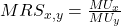 | Indicates subjective willingness to substitute good for good |
| Budget Constraint |  | Defines maximum affordable combination given income |
| Price Ratio |  | Represents market trade-off rate between two competing goods |
| Equi-Marginal Condition |  | Identifies optimal utility-maximizing spending allocation |
Real-World Corporate Applications and Strategic Execution
Global enterprises utilize the mechanics of rational consumer choice to design portfolio architectures, construct dynamic pricing tiers, and maximize consumer surplus capture. By analyzing how target market segments evaluate price-to-utility ratios, corporations optimize their commercial operations across international markets.
Technology and Ecosystem Architecture: Apple
Consumer electronics giant Apple systematically applies principles of rational consumer choice through hardware-software integration and tiered price differentiation. When evaluating high-end smartphones, laptops, or wearables, consumers weigh upfront purchase prices against expected utility derived from device performance, brand prestige, software synchronization, and security features.
Apple structures product lines—such as offering the standard iPhone priced at approximately USD799 alongside premium Pro models ranging from USD999 to USD1,199—to capture differing consumer utility curves. By bundling proprietary services like iCloud, Apple Music, and Apple Pay, the company artificially inflates switching costs. This increases the perceived marginal utility of staying within the Apple ecosystem relative to switching to rival hardware, rendering the rational choice for existing users one of ecosystem retention.
Subscription Dynamics and Content Value: Netflix
In the digital streaming sector, Netflix applies rational choice theory to optimize subscription plan tiers and monetization models. The company projects full-year 2026 consolidated revenue between USD50,700,000,000 and USD51,700,000,000, driven by healthy subscriber growth and ad-tier expansion.
Netflix offers distinct membership tiers—such as ad-supported plans at lower price points versus Premium ultra-high-definition multi-screen tiers—allowing subscribers to self-select based on their income constraints and marginal utility for video resolution and ad-free viewing. When Netflix adjusts subscription prices, it relies on content investments (generating tens of billions in annual entertainment value) to raise the baseline utility of the platform. As long as  remains higher than alternative entertainment options (e.g., cable television, cinema tickets, or competing platforms), subscribers rationally maintain their active memberships.
Value Engineering and Total Cost of Ownership: Toyota
Automotive manufacturer Toyota aligns its manufacturing and marketing strategies with rational consumer choice by focusing on long-term vehicle reliability, fuel efficiency, and resale value. Automobile buyers often calculate total cost of ownership rather than focusing solely on the sticker price.
By embedding lean manufacturing principles and hybrid drivetrain innovations across its vehicle lineup, Toyota maximizes utility related to vehicle durability and operating efficiency. A rational buyer comparing a vehicle priced at USD28,000 with a competitor at USD26,000 frequently chooses Toyota because lower maintenance expenses and higher residual trade-in values yield a superior lifetime  ratio.
Experience Monetization and Versioning: Starbucks
Coffeehouse enterprise Starbucks demonstrates how experiential utility can shift consumer willingness to pay. A basic cup of black coffee costs relatively little to produce, yet Starbucks commands premium prices—often ranging from USD4.50 to USD7.00 for customized specialty beverages—by enhancing non-product utility components.
These components include store ambiance, mobile order convenience, customized ingredient options, and customer reward points. A rational consumer willing to pay USD5.50 for a latte is maximizing utility over a combined bundle: caffeine intake plus store atmosphere, speed of service, and brand experience. Starbucks effectively expands consumer willingness to pay by shifting the indifference curve outward through added functional and emotional benefits.
Flat-Pack Efficiency and Price Optimization: IKEA
Global home furnishings retailer IKEA targets price-sensitive segments by unbundling product assembly and delivery from furniture manufacturing. Consumers are offered lower retail prices in exchange for performing self-assembly and transport.
A buyer operating under a strict budget constraint evaluates the trade-off: spending USD300 on a pre-assembled desk versus spending USD150 at IKEA plus two hours of self-assembly labor. For consumers whose shadow price of time is lower than the USD150 price differential, choosing IKEA represents a rational utility-maximizing decision.
| Company | Core Strategic Lever | Application of Rational Choice Principles | Business Outcome |
| Apple | Hardware/Software Ecosystem | Raises switching costs to preserve high relative marginal utility | Premium pricing power and high customer retention rates |
| Netflix | Tiered Subscription Pricing | Aligns subscription tiers with consumer price elasticity and content utility | Projected 2026 revenues of USD50.7B–USD51.7B |
| Toyota | Total Cost of Ownership Optimization | Maximizes long-term consumer utility through durability and high resale value | Global automotive market leadership and strong brand equity |
| Starbucks | Experiential & Customization Value | Bundles premium service and store environment with core beverage products | High price realization per transaction |
| IKEA | Self-Assembly & Cost Unbundling | Allows consumers to trade personal time for lower monetary expenditure | Market expansion across price-sensitive demographic segments |
Boundaries of Rationality: Behavioral Microeconomics
While classical rational consumer choice theory provides a powerful benchmark, empirical research in behavioral economics demonstrates that human decision-making frequently deviates from strict economic rationality due to cognitive limitations, psychological biases, and contextual framing.
Bounded Rationality and Satisficing
Nobel laureate Herbert Simon introduced the concept of bounded rationality, recognizing that human beings face cognitive constraints, limited information, and time pressures. Rather than evaluating every possible combination of products to reach absolute utility maximization, consumers routinely engage in “satisficing”—selecting an option that meets a minimum threshold of acceptability.
For corporate decision-makers, satisficing implies that brand recognition, top-of-mind recall, and retail shelf placement can outweigh minor differences in price or product performance. Consumers often pick the first highly recognizable option that satisfies their basic functional requirements rather than executing exhaustive market research.
Cognitive Biases and Behavioral Anomalies
Behavioral economics identifies several systematic psychological patterns that alter consumer decision-making:
- Anchoring Effect: Consumers place disproportionate weight on the first piece of information received. For example, establishing a high original reference price (e.g., “Regularly USD1,200, Now USD899”) artificially inflates perceived utility and consumer surplus, driving purchase conversion.
- Loss Aversion: Amos Tversky and Daniel Kahneman demonstrated that the psychological pain of losing something is approximately twice as intense as the pleasure of acquiring an equivalent gain. Businesses leverage loss aversion through free trials, subscription auto-renewals, and limited-time promotional offers that frame non-purchase as losing a valuable opportunity.
- Framing Effects: The presentation of options heavily impacts choice outcomes. Consumers evaluate a product framed as “90% lean” far more favorably than one labeled “10% fat,” despite mathematical identity between the two statements.
- Status Quo Bias and Default Rules: Individuals display a strong inclination to remain with default settings. Auto-subscription renewals, default contribution escalation in financial products, and pre-selected feature packages capitalize on consumer inertia.
Choice Architecture and Digital Choice Environments
In e-commerce platform design, digital choice architecture dictates how options are structured and presented to online shoppers. Digital marketplaces utilize algorithmic recommendations, personalized dynamic pricing, scarcity badges (e.g., “Only 2 items remaining in stock”), and strategic product layout to influence decision journeys.
While neoclassical models view choice environments as neutral backdrops, behavioral empirical evidence demonstrates that altering option sequencing, default choices, or visual presentation drastically shifts consumer selections without changing product price points or underlying income constraints.
Managerial Implications and SEO-Driven Growth Strategies
For executive leadership, integrating rational consumer choice theory with empirical behavioral insights provides a framework for driving market share expansion, enhancing pricing power, and executing corporate growth strategies.
Designing Product Portfolios around Consumer Surplus
Consumer surplus represents the net economic benefit gained by a buyer, calculated as the difference between maximum willingness to pay ( ) and actual market transaction price (
 ):
):
![\[\text{Consumer Surplus} = WTP - P\]](https://www.SuperBusinessManager.com/wp-content/ql-cache/quicklatex.com-ff735b92598cbb4bb946d1daf809a17a_l3.png "Rendered by QuickLaTeX.com")
To maximize revenue without triggering churn, managers must construct product portfolios that segment market willingness to pay:
- First-Degree Price Discrimination (Personalized Pricing): Leveraging machine learning and historical consumer data to tailor prices to individual willingness to pay.
- Second-Degree Price Discrimination (Versioning and Volume Tiering): Offering tiered feature sets (e.g., Basic, Business, Enterprise software packages) allowing consumers to self-select optimal utility-price bundles.
- Third-Degree Price Discrimination (Demographic Segmenting): Offering regional, student, or senior discounts based on measurable differences in price elasticity of demand across distinct consumer groups.
Elasticity of Demand and Dynamic Pricing Optimization
Strategic pricing requires measuring Price Elasticity of Demand ( ), which measures the percentage change in quantity demanded resulting from a one percent change in price:
![\[E_d = \frac{\% \Delta Q}{\% \Delta P} = \frac{\partial Q}{\partial P} \cdot \frac{P}{Q}\]](https://www.SuperBusinessManager.com/wp-content/ql-cache/quicklatex.com-76171eb8f7e01c7e2d39882feda7ce3e_l3.png "Rendered by QuickLaTeX.com")
Understanding elasticity allows financial officers to predict revenue impacts prior to modifying pricing structures:
- Elastic Demand (
 ): Price increases reduce total revenue; price decreases expand market share and total top-line revenue.
 - Inelastic Demand (
 ): Price increases yield higher total revenue because the percentage decrease in quantity demanded is smaller than the percentage increase in unit price.
 - Unitary Elasticity (
 ): Total revenue is maximized at the current price point.
+---------------------------------------------------------------------------------------------------+
|                           STRATEGIC PRICING AND ELASTICITY MATRIX                                 |
+-----------------------------------+-----------------------------------+---------------------------+
| Market Demand Characteristics     | Pricing Action                    | Revenue & Utility Impact  |
+-----------------------------------+-----------------------------------+---------------------------+
| Highly Inelastic (|Ed| < 1)       | Strategic Price Escalation        | Top-line expansion; minimal|
| High brand loyalty / low substitutes| Example: Specialty Pharmaceuticals | volume loss               |
+-----------------------------------+-----------------------------------+---------------------------+
| Highly Elastic (|Ed| > 1)         | Promotional / Penetration Pricing | Mass volume capture;      |
| Commodity goods / high competition| Example: Fast-Fashion Apparel     | expands overall base      |
+-----------------------------------+-----------------------------------+---------------------------+
| Cross-Price Sensitive (Es > 0)    | Ecosystem Bundling                | Protects core product     |
| Complementary platforms           | Example: Hardware + Cloud Services| through systemic lock-in  |
+-----------------------------------+-----------------------------------+---------------------------+
Strategic Checklist for Corporate Leadership
To ensure corporate strategy aligns with consumer utility dynamics, executive teams should systematically evaluate four strategic pillars:
- Utility Calibration: Conduct conjoint analysis and empirical market testing to identify which specific product attributes (e.g., speed, brand prestige, warranty length, convenience) deliver the highest marginal utility per dollar invested in production.
- Budget Constraint Alignment: Ensure product architectures offer clear entry-level value options during macroeconomic downturns or inflationary periods when consumer real income shrinks.
- Ecosystem Integration: Build product ecosystems that systematically increase switching costs, increasing the long-term utility of staying within the corporate product line relative to rival alternatives.
- Behavioral Auditing: Review digital checkout funnels, pricing pages, and promotional structures to identify friction points, leveraging choice architecture to guide consumers toward high-margin tiers.
Conclusions
Rational consumer choice theory remains a foundational pillar of microeconomic analysis and corporate commercial strategy. By modeling how consumers maximize utility within explicit income constraints, enterprises can systematically evaluate market demand, construct optimized pricing hierarchies, and forecast revenue outcomes across global markets.
However, modern business leadership requires a hybrid perspective that synthesizes neoclassical rational models with the practical insights of behavioral economics. While utility maximization provides the logical baseline for consumer decision-making, real-world execution requires accounting for bounded rationality, cognitive biases, and choice architecture.
Companies like Apple, Netflix, Toyota, Starbucks, and IKEA demonstrate that long-term commercial success depends on deep alignment with consumer decision models. By continually optimizing the price-to-utility ratio, investing in ecosystem lock-in, and structuring intuitive digital purchase environments, organizations can maximize both consumer surplus and long-term shareholder value in an increasingly competitive global marketplace.
