The enterprise technology landscape is undergoing a structural paradigm shift. As organizations transition from exploratory artificial intelligence initiatives to production-grade, agentic deployments, the primary bottleneck to scalable execution has shifted from model design to data infrastructure. The traditional data engineer—focused historically on relational databases, batch extract-transform-load processes, and structured data warehousing—is rapidly evolving into the AI Data Engineer.
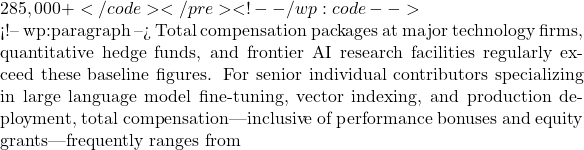
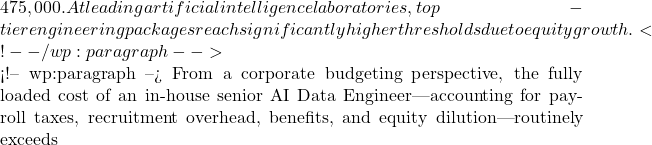
This specialized architectural role bridges the gap between raw, multi-modal enterprise data assets and operational machine learning and large language model systems. The global data engineering and big data market is projected to surpass 





Global Enterprise Case Studies
Financial Services: JPMorgan Chase & Co.
In the global banking sector, financial institutions utilize AI Data Engineers to aggregate heterogeneous transaction data across global networks. JPMorgan Chase has invested heavily in proprietary data platform architecture to support real-time fraud detection, automated algorithmic trading, and internal wealth management analytics. AI Data Engineers within the organization build sub-second streaming pipelines that ingest telemetry from millions of credit card interactions, converting unstructured transaction metadata into vector embeddings to flag anomalies before payment settlement occurs.
Industrial Manufacturing: Siemens AG
German multinational Siemens leverages AI data engineering to operationalize industrial Internet of Things telemetry across modern manufacturing facilities. By processing terabytes of sensor data, acoustic feeds, and thermal imaging from industrial machinery, Siemens’ data engineering platform powers predictive maintenance algorithms. The infrastructure routes high-frequency operational technology data into cloud-native data lakehouses, reducing unscheduled factory downtime and optimizing global supply chain logistics.
Media and Telecommunications: Netflix
Streaming media providers rely on AI Data Engineers to handle immense data ingestion scales. Netflix processes hundreds of billions of daily user interaction events to drive its personalized recommendation engine, content production analytics, and encoding optimization algorithms. The company’s data engineering teams maintain real-time streaming pipelines that deliver contextual user preferences into machine learning models, dynamically updating content recommendations within milliseconds.
Operational Challenges and Strategic Mitigations
Despite the rapid scaling of AI data infrastructure, enterprise adoption faces technical and operational obstacles:
- Data Pipeline Reliability: Global operational benchmarks reveal that 30% to 40% of enterprise data pipelines encounter weekly pipeline disruptions or data degradation errors. AI Data Engineers counter this by implementing DataOps frameworks, automated circuit breakers, and programmatic data validation testing.
- Unstructured Data Quality and Drift: Machine learning models degrade when underlying real-world data distributions shift. Engineers deploy continuous monitoring systems that evaluate statistical drift in vector embeddings and automated schema evolution tooling.
- Regulatory Compliance and Sovereignty: Highly regulated sectors—such as healthcare and banking—must balance advanced AI analytics with strict compliance standards, including GDPR, HIPAA, and regional data residency mandates. Modern AI data architectures incorporate privacy-preserving computation, enterprise access controls, and automated data lineage tracking to ensure governance.
Conclusion
The role of the AI Data Engineer has transitioned from a specialized niche to an indispensable strategic asset for modern enterprise operations. As organizations expand their artificial intelligence investments from internal pilots into mission-critical, autonomous production systems, the ability to build robust, secure, and real-time data infrastructure serves as the primary differentiator of business performance.
By deploying scalable data lakehouses, robust vector storage, real-time feature stores, and automated governance frameworks, AI Data Engineers unlock the true commercial value of corporate data assets. Enterprise executive teams that prioritize human capital acquisition, capital expenditure, and structural alignment around AI data engineering will establish durable competitive advantages in an increasingly automated global economy.

