Accelerating retirement savings is less about finding a “magic” investment and more about maximizing the efficiency of the tools already available to you. By 2026, new regulations have made it easier to push larger sums into tax-advantaged accounts, especially for those over 50.
Here are the most effective strategies to speed up your path to retirement.
1. Maximize 2026 Contribution Limits
The IRS frequently adjusts contribution limits to account for inflation. For 2026, these limits allow for significant aggressive saving:
- 401(k) and 403(b): The employee contribution limit has risen to

- The “Free Money” Rule: At a minimum, always contribute enough to get your full employer match. For example, Boeing has historically offered a generous 401(k) match (often 100% on the first 10% of pay for certain employee groups), which effectively doubles your savings rate instantly.

2. Utilize “Catch-Up” and “Super Catch-Up” Provisions
If you are 50 or older, you can save significantly more than younger workers.
Standard Catch-Up: Those 50+ can add an extra 

New “Super Catch-Up”: Under the SECURE 2.0 Act, starting in 2025/2026, individuals aged 60 to 63 can contribute even more—up to 

HSA Boost: If you have a High Deductible Health Plan, those 55+ can add an extra 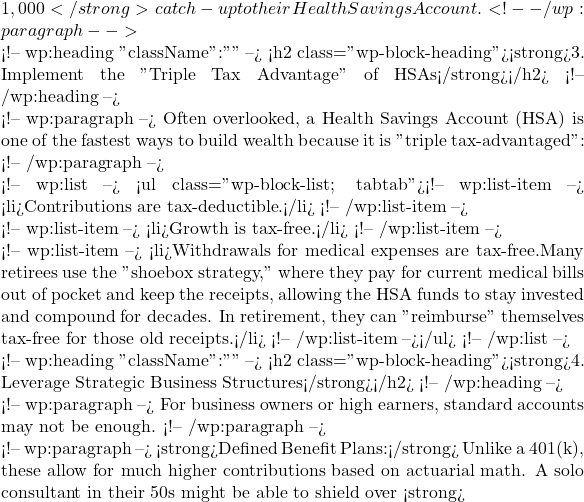

Mega Backdoor Roth: Some companies, like Google and Meta, offer 401(k) plans that allow for “after-tax” contributions. This allows employees to contribute up to the total limit (which is To provide an accurate retirement contribution schedule, I have used the updated 2026 IRS limits. These schedules focus on “maxing out” to accelerate your savings. Since you are aiming for acceleration, these examples assume you are targeting the maximum legal limits for 2026 to take full advantage of tax-deferred growth. Target: Maximize 401(k) and IRA Total Annual Goal: Target: Maximize with Catch-up Provisions Total Annual Goal: Target: Maximize SECURE 2.0 Super Catch-up Total Annual Goal: Roth Requirement for High Earners: In 2026, if you earned more than $145,000 (indexed for inflation) in the previous year, the IRS requires your 401(k) catch-up contributions to be made on a Roth (after-tax) basis. This is a significant change from SECURE 2.0 that prevents high earners from taking an immediate tax deduction on those extra catch-up dollars. Front-Loading: Companies like Apple and Microsoft often allow employees to “front-load” their contributions early in the year. If you receive a bonus in January or February, contributing a large percentage of it immediately allows that money more “time in the market” to compound throughout the rest of 2026. The “Auto-Escalation” Hack: If these numbers look too high for your current budget, use the Nominal Increase method used by companies like Amazon. Set your 401(k) to “Auto-Escalate” by 1% or 2% every year on your work anniversary or after a performance review. Because it happens automatically, you likely won’t feel the “pinch” in your take-home pay.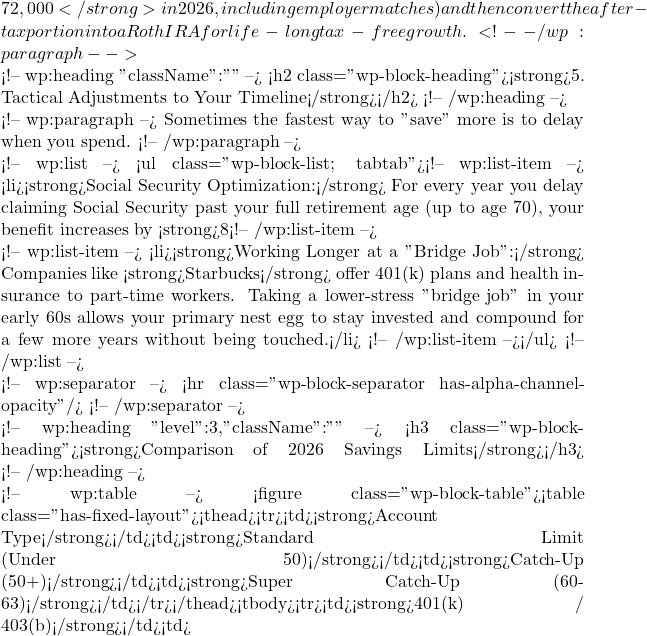

IRA (Roth/Trad) 


Personalized Contribution Schedule (Your Current Age & Income Level)
Scenario 1: The “Early Career” Saver (Under Age 50)


Bi-Weekly (26) 


Scenario 2: The “Catch-Up” Saver (Age 50–59)


Bi-Weekly (26) 


Scenario 3: The “Super Catch-Up” Saver (Age 60–63)

Bi-Weekly (26) 

Critical 2026 Strategy Notes


